March 2026
Project Outline
Scope of Works
Our Contracting division delivered a comprehensive Phase 1 package of works across the 110m² Presbytery roof, including:
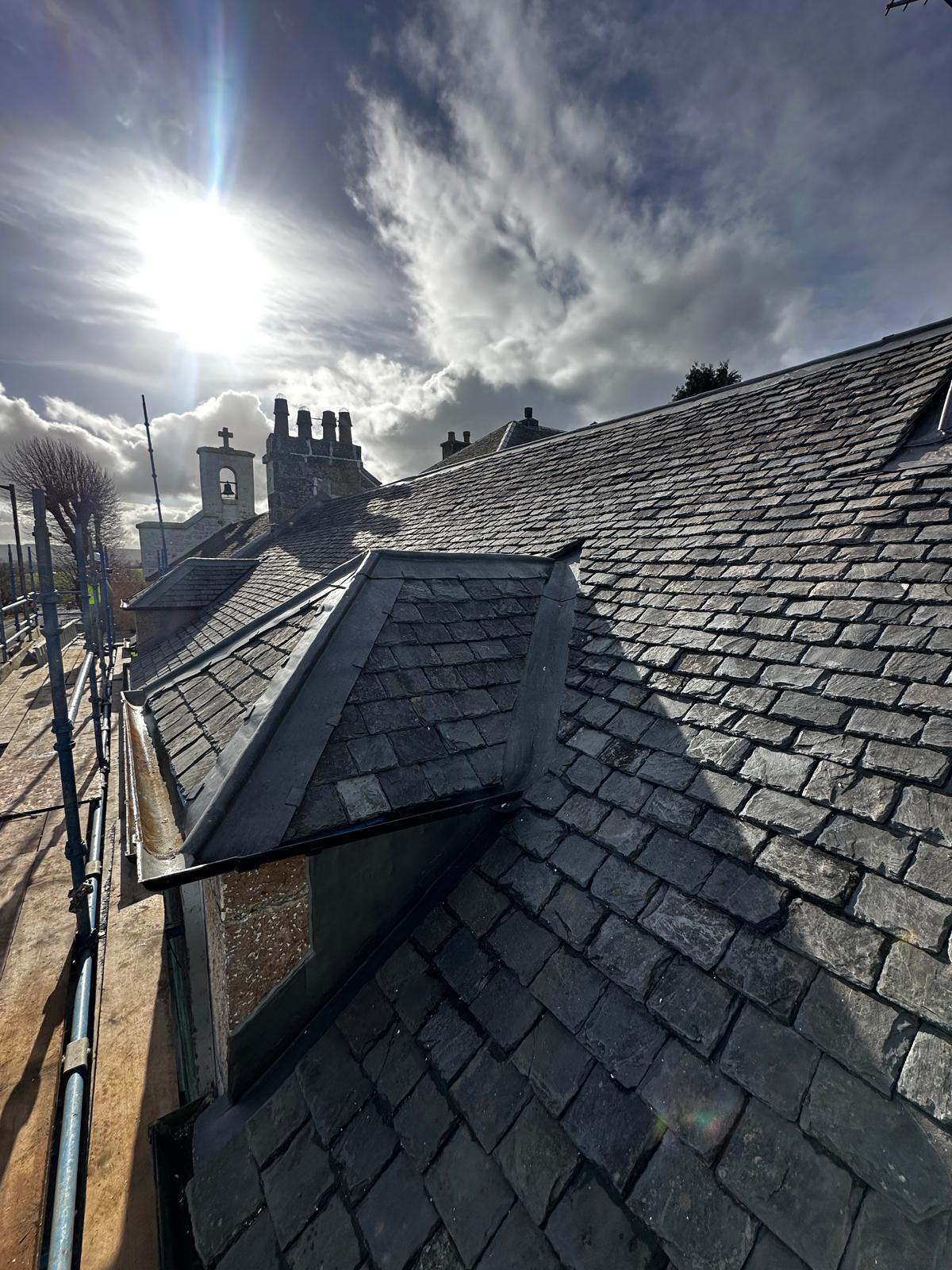
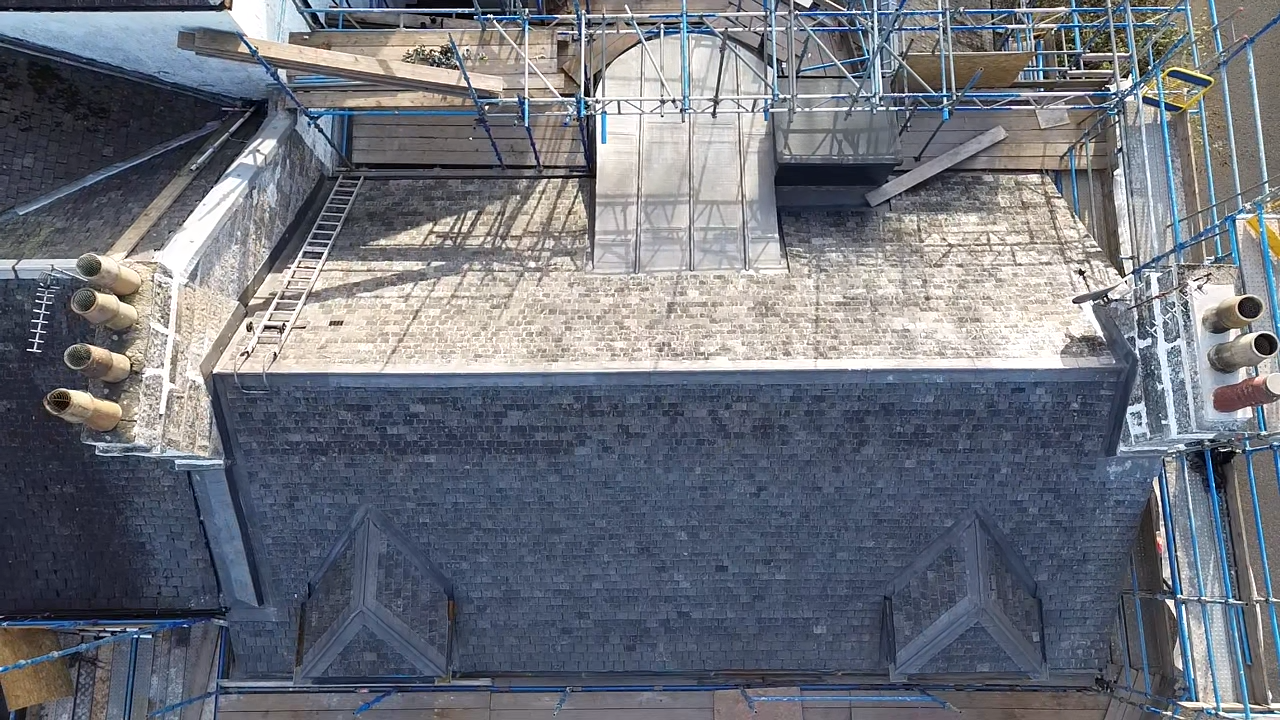
Ballachulish Scotch slate was specified as the primary roofing material — a traditional choice appropriate to the building's heritage status and the expectations of the Diocese. Wherever possible, original slates were salvaged, dressed and reinstalled: approximately 40% of the existing slate was retained and reused, prioritised on visible slopes to preserve the roofscape character and substantially reducing waste.
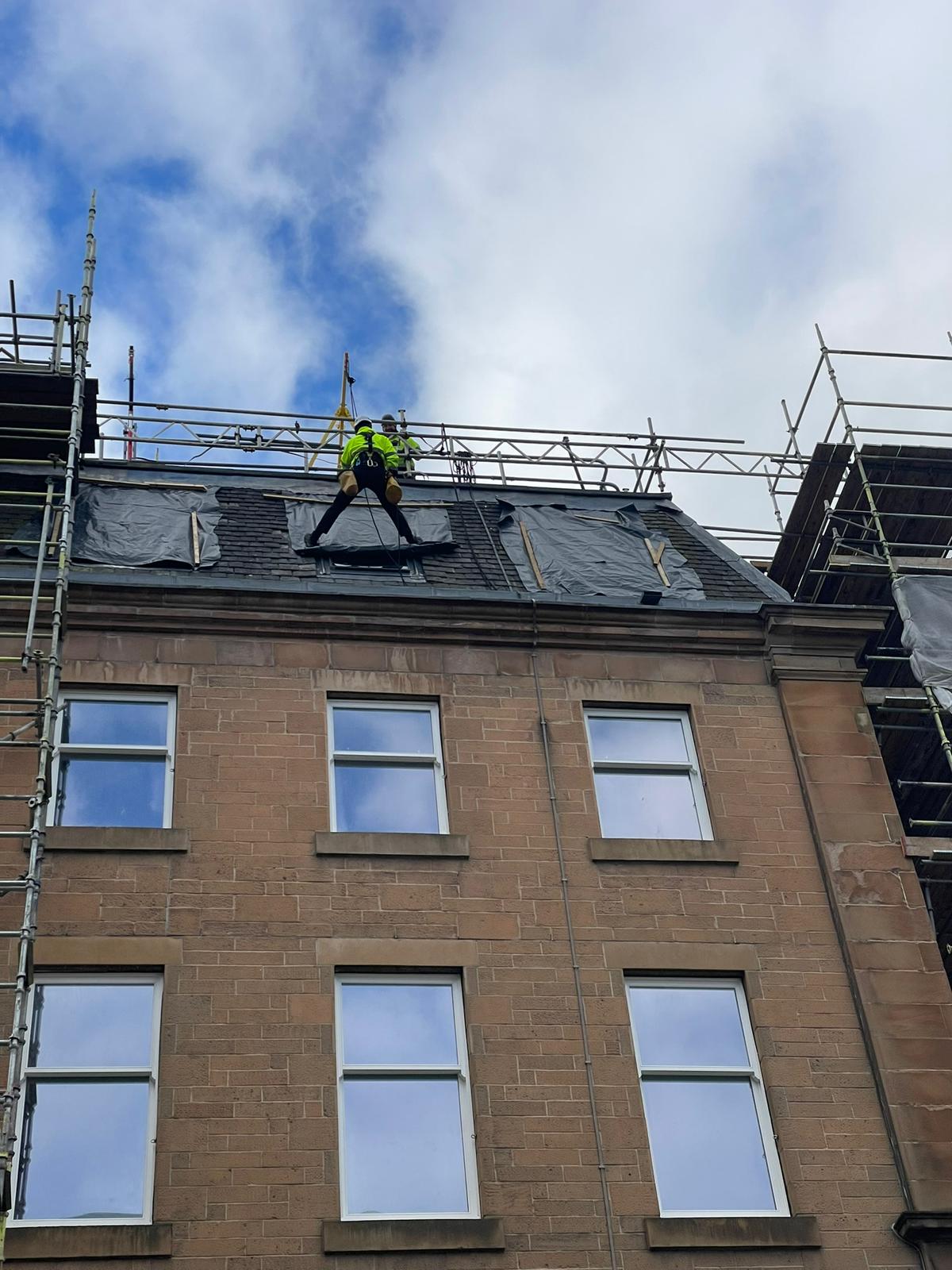
The entire works were encapsulated beneath a HAKI temporary roof installed by JR Scaffold Services, enabling conservation-quality delivery through the wetter winter months and ensuring the programme was never dictated by Scottish weather.
Challenges & Solutions
Structural timber deterioration.
When the roof was stripped, the extent of rotted and damp timber was far greater than had been visible beforehand. Around 70% of the structural rafters and sarking required full renewal. Roof areas were opened in controlled sections, defects recorded immediately and photographed before reinstatement, and weather protection maintained throughout. Peter Cox Ltd carried out the wood rot treatment, backed by a 20-year guarantee.
Turnpike roof structural rebuild.
The turnpike — the Presbytery's distinctive conical roof feature — presented a particular challenge. The underlying timber structure was found to be severely compromised by rot, requiring a complete rebuild from structural timbers upward. The rebuilt turnpike was then weathered with Code 8 lead, providing a durable and period-appropriate finish at one of the most visible points on the building.
Non-breathable paint removal.
The historic stonework carried multiple layers of non-breathable paint requiring careful removal. A controlled separation and wash process was used to protect the stone face, avoiding aggressive cleaning methods entirely. Some areas required repeated treatment and wash cycles. The additional scope was agreed with the contract administrator as a formal variation, with findings evidenced photographically so the client could authorise additional works quickly and keep the programme moving.
Working on a live place of worship.
The church remained in full use for worship throughout the works. Routes parishioners used to enter and move around the building were kept open, physically fenced off from work areas and clear of overhead activity. Works were delivered in accordance with scheduled worship times, and the congregation was treated as a key stakeholder throughout.
Winter working.
Rather than working section by section against Scottish weather, the full works were encapsulated beneath a HAKI temporary roof. This allowed the team to strip the roof, undertake timber renewal and re-slating in controlled, dry conditions throughout the wetter winter months, protecting both the programme and the historic building beneath.
Project Outcome
A Restored Roofscape for a Historic Church
The completed Phase 1 works have returned the St Fillans Presbytery to a weathertight, structurally sound condition — preserving a building of genuine historic and community significance for the Diocese of Paisley. The use of Ballachulish Scotch slate, combined with the careful salvage and reinstatement of approximately 40% of the original slates, ensures the restored roof sits sympathetically within the church's historic character and the Houston Village Conservation Area.
The rebuilt turnpike, finished in Code 8 lead, and the renewed cast iron rainwater goods and leadwork throughout the building provide long-term protection against the elements and significantly reduce the maintenance burden on the Diocese going forward. The project was completed with no reportable or recorded incidents or accidents.
Training the Next Generation of Heritage Roofers
One of the most rewarding aspects of this project was the opportunity it provided for apprentice development. Kai worked on site throughout the project, gaining hands-on experience in Scotch slate installation and leadwork detailing on a live heritage building. Suitable tasks were allocated to support his development — including slate handling, sorting and fixing — with his competence continually checked so that learning supported the quality of the finished work. Heritage roofing skills are increasingly rare, and projects like St Fillans are vital for passing them on.
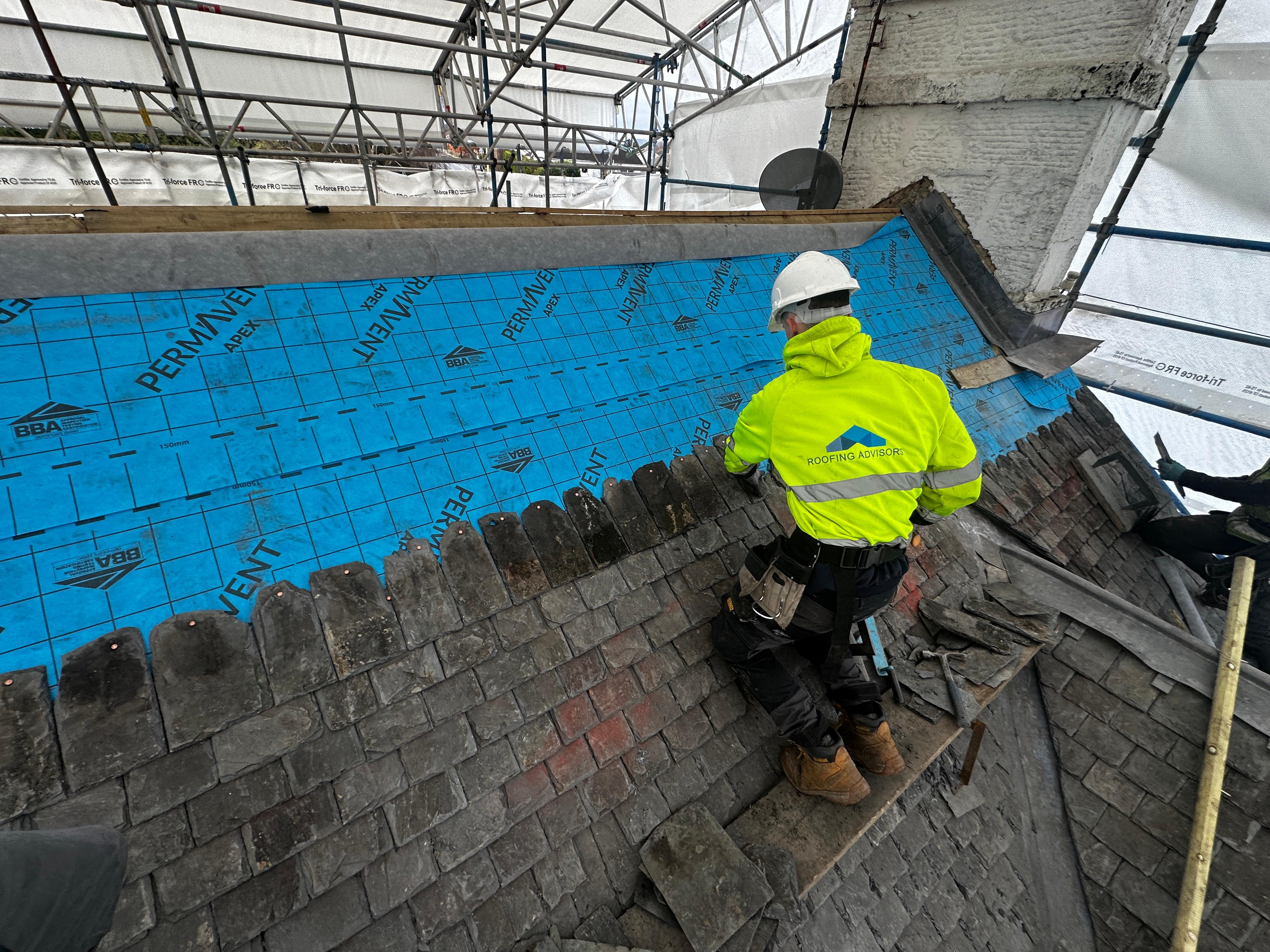
“Working on St Fillans Church has been a great experience for me. I’ve had the opportunity to learn how to install Scotch slates and get involved with leadwork, which isn’t something you get to do on every job. Being part of a project like this has helped me build my skills and confidence, and I’m learning something new every day.”
- Kai, Apprentice Roofer, Roofing Advisors
A Project Rooted in the Community
At the close of the project, an open evening was held in the church hall for the parish and the wider community, attended by around 150 people. Members of the congregation and local residents came to hear what had been done to their building and to ask questions of the project team directly — a chance to explain in person what parishioner donations had helped to pay for. It was very well received and a fitting way to hand a much-loved building back to the people who use it every day.
Heritage Roofing Expertise
St Fillans RC Church is a strong example of Roofing Advisors' capability in heritage and conservation roofing — a specialism that demands not only technical skill but an understanding of historic building materials, traditional craft methods, and the sensitivities of working on buildings of architectural and cultural significance.
Our Contracting division works across Scotland and the UK on church, listed building and heritage roofing contracts, procured through both private appointment and public sector frameworks including Public Contracts Scotland.
Working on a church, listed building or heritage property? Contact our Contracting team to discuss your project.




.jpg)